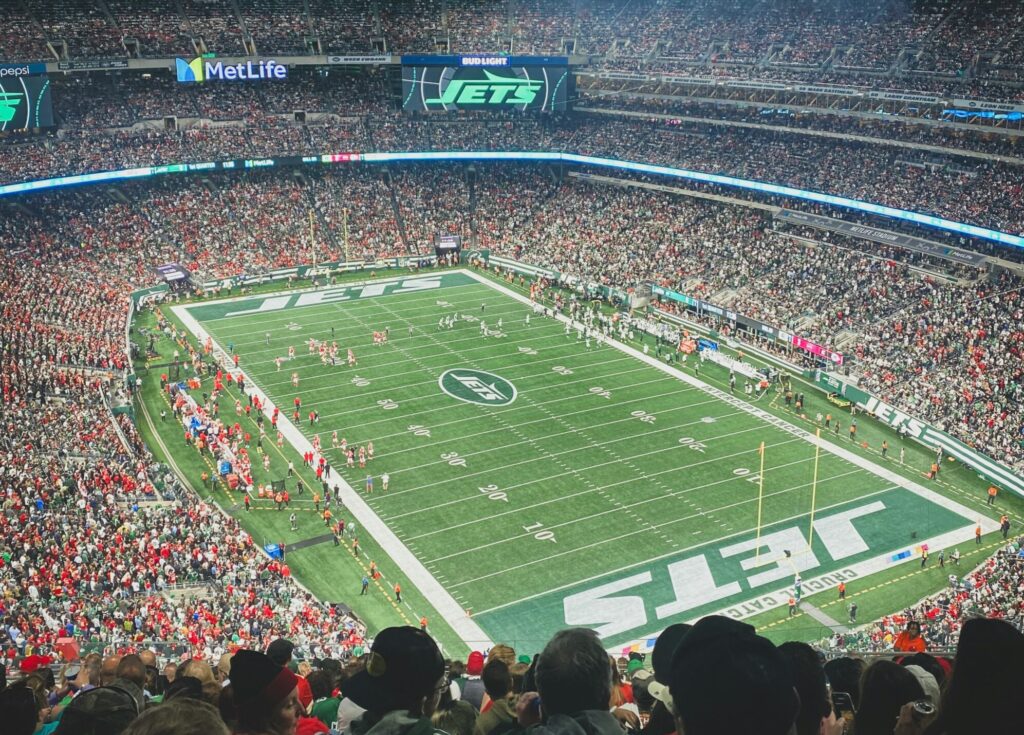
If there is one thing we love as much as breaking down the latest mobile hardware and repair tech, it is Sunday football. As massive NFL fans, we constantly catch ourselves looking past the incredible athletic feats and focusing on what is happening on the sidelines and inside the gear. Beyond the multi-million-dollar broadcast cameras and flying drone shots, the modern gridiron is one of the most hostile, fast-paced testing grounds for cutting-edge mobile, sensor, and wireless engineering in the entire world.
Have you ever wondered how coaches download high-definition play breakdowns in sub-zero Green Bay weather without the battery dying? Or how referees and statisticians track a running back’s top speed down to the exact decimal? The answers lie in a massive, interconnected web of gadgets and networks that would make any tech enthusiast drool. Let’s take a deep dive under the hood at the NFL game technology powering the real-time action on the field, and see how the tech used by pro athletes mirrors the mobile devices we use every day.
1. RFID Tracking: The Silicon Inside Shoulder Pads and Footballs
Every time you watch a broadcast and see “Next Gen Stats” highlighting a wide receiver’s sprint speed (like hitting 22 mph) or a quarterback’s precise throwing window, you are looking at ultra-wideband (UWB) tracking hardware in action. It is a level of precision that standard GPS or Bluetooth simply cannot achieve.
Inside the shoulder pads of every active player on the field are two coin-sized RFID (Radio Frequency Identification) transmitters. These micro-sensors beam positional coordinates, speed, and acceleration data 25 times per second to receivers installed throughout the stadium structure. Think of it as a localized, hyper-accurate version of the GPS chip inside your smartphone, but processing data at a fraction of a millisecond.
But the tracking doesn’t stop with the human athletes. The official Wilson game balls contain an embedded, custom-molded sensor smaller than a marble. It measures rotational speed (spin rate), release velocity, trajectory, and exact field location. The most impressive part? Engineers managed to suspend this tech inside the bladder of the football without altering the weight, aerodynamics, or balance of the ball by even a fraction of an ounce. When we talk about miniaturization in tech, this is the gold standard.
2. Rugged Sideline Tablets: Surviving the Elements
Gone are the days of polaroid printouts delivered in bulky three-ring binders. Today’s NFL sidelines rely on custom-engineered, military-grade Microsoft Surface tablets connected via private, ultra-secure local stadium networks. As people who know a thing or two about screen protectors and device durability, these tablets are a marvel of ruggedization.
Check out this awesome video breakdown to see exactly how these sideline networks and communications systems operate in real-time.
The sidelines are a terrible place for delicate electronics. These devices must survive a unique set of hazards that would destroy a standard consumer tablet in minutes:
- Extreme Weather Resistance: Sideline tablets must operate seamlessly in pouring rain, dense snow, 100°F Miami heat, and sub-freezing conditions. Standard lithium-ion batteries fail in extreme cold, so these utilize specialized thermal management systems to keep the internal cells warm.
- Anti-Glare High-Nit Screens: The displays are calibrated to be easily readable under blinding direct sunlight, cutting through glare even when a coach is wearing polarized sunglasses.
- Drop and Impact Proofing: Encased in heavy-duty polymer bumpers with sealed port covers, they are designed to survive being dropped on concrete, thrown in frustration after an interception, or crushed by 250-pound athletes accidentally crashing into the bench area.
3. Encrypted Audio and “Green Dot” Helmets
If you look closely at the quarterback and one designated defensive player (usually a middle linebacker), you will see a helmet marked with a distinctive green dot sticker. Inside these specific helmets lies an advanced wireless communication receiver that bridges the gap between the coaching staff and the field.
Running crystal-clear voice communication inside a stadium packed with 70,000 screaming fans—all carrying smartphones emitting competing wireless signals—presents serious acoustic and signal challenges. The NFL handles this with strict tech protocols:
- Digital Encryption: Audio feeds run on dedicated, frequency-hopping radio bands to prevent opposing teams from eavesdropping and to stop radio interference from nearby stadium broadcasts.
- Cutoff Automation: By strict NFL rule, the audio line automatically cuts off when the play clock reaches 15 seconds or when the ball is snapped. This is handled by a referee-controlled master switch on the sidelines.
- Custom Audio Drivers: Small, high-decibel speakers are sealed inside the helmet’s inner foam shell. They are highly directionalized straight toward the player’s ear canal while actively dampening ambient crowd noise.
4. Smart Helmets and Impact Telemetry
Player safety is where micro-electronics and materials science truly intersect. Modern football helmets (such as the VICIS ZERO2 or the Riddell Axiom) are no longer just rigid plastic shells. They are multi-layered, highly engineered shock absorption platforms that deform upon impact, similar to a car’s crumple zone.
Many of these modern helmets can be equipped with multi-axis accelerometers and pressure sensors. This modern safety gear measures the g-force, impact angle, and rotational velocity of collisions in real-time. When a hit surpasses a critical threshold, sideline medical staff receive an immediate wireless alert on their diagnostic monitors, prompting independent spotters to pause the game and review the play for potential head trauma.
5. The Mobile Sideline Diagnostic Center
The sideline tech ecosystem extends far beyond digital playbooks and passing statistics. When an injury occurs, medical staff deploy a suite of high-tech mobile diagnostic equipment right on the turf, essentially turning the sidelines into a highly efficient mini-hospital:
- Pop-Up Medical Tents: These instantly deployable blue tents are equipped with secure biometric monitors and tablet feeds connected to stationary stadium cameras. This allows independent doctors to review multi-angle video of the exact moment an injury occurred to assess joint mechanics.
- Portable Digital X-Rays: Modern locker rooms feature mobile digital radiography units. Instead of waiting for a hospital visit, players get bone scans that are delivered digitally to team orthopedic specialists within minutes.
- Core Temperature Sensors: During early-season games in extreme heat, players can swallow ingestible telemetric pills. These smart pills transmit real-time internal body temperatures to the medical staff’s tablets, allowing them to intervene before a player suffers from dangerous heat illness.
The Verdict: A Masterclass in Reliability
As tech enthusiasts, watching an NFL game is like watching an orchestrated, high-stakes demo of mobile hardware engineering. Between high-frequency RFID sensors tracking the football, weatherproofed tablets surviving snowstorms, encrypted radio networks cutting through stadium noise, and impact-resistant microchips keeping players safe, the gridiron demands the absolute highest level of hardware durability in the world.
Much of the ruggedization, battery thermal management, and wireless connectivity tech tested on these fields eventually trickles down to the consumer smartphones, smartwatches, and tablets we repair and use every single day. So, the next time your favorite team lines up on 4th-and-inches, keep an eye on the sidelines and the helmets—there is just as much silicon and engineering talent at work as there is athletic power.

Discussion (0)
No responses yet.